
What is a Compact Wheel Loader and How Does It Work?

Compact Wheel Loaders are vital in construction and landscaping. They blend versatility and efficiency. According to industry expert John Davis, “A Compact Wheel Loader maximizes productivity in tight spaces.” This statement emphasizes their unique capability to perform heavy-duty tasks in limited areas.

These machines are designed for maneuverability, making them perfect for urban settings. They excel in loading materials, moving earth, and lifting heavy objects. The compact design allows access to narrow job sites where larger machines cannot operate. This will enable operators to tackle various projects effectively.

Despite their benefits, challenges exist. Compact Wheel Loaders require proper training and maintenance. Neglecting these aspects can lead to performance issues. Operators must understand the machine's limits. Balancing power and precision is crucial for optimal results. With proper handling, these loaders can truly shine.
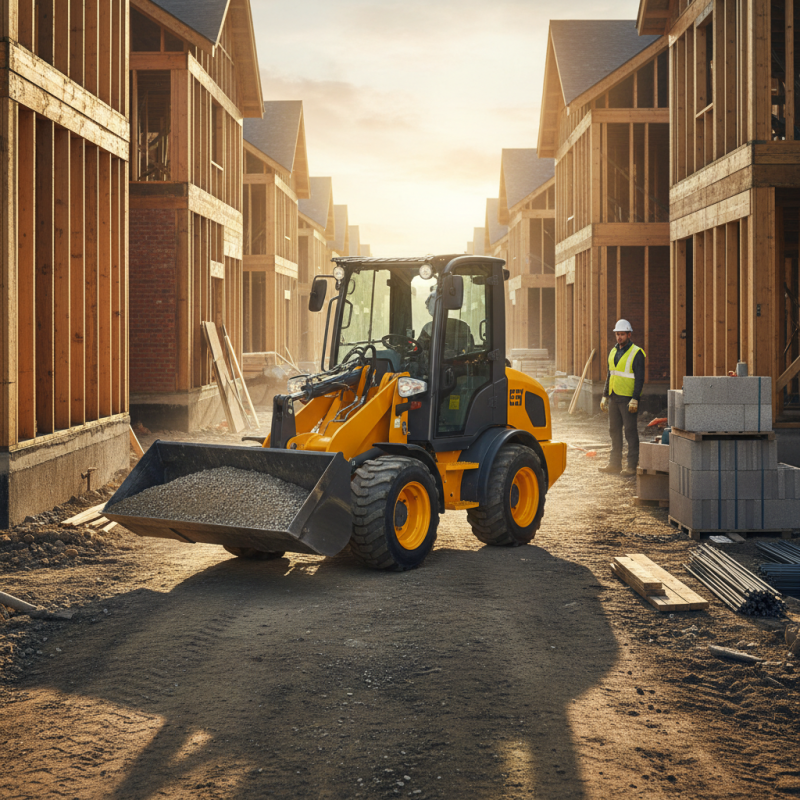
What is a Compact Wheel Loader and How Does It Work?

What is a Compact Wheel Loader?

A compact wheel loader is a versatile piece of equipment commonly used in construction and landscaping. These machines are designed for tasks that require mobility and efficiency in tight spaces. According to industry data, compact wheel loaders typically have a rated operating capacity of 1,500 to 3,500 pounds. Their size allows them to navigate narrow streets and crowded job sites with ease.

These loaders operate using a hydraulic system, which powers the bucket and boom. This mechanism enables operators to lift materials like dirt, sand, and gravel efficiently. They often feature a four-wheel drive, enhancing traction on uneven terrain. As compact wheel loaders gain popularity, their market is expected to grow by 5% annually through 2027. This demand is largely attributed to their adaptability across various applications.

However, operators must be cautious. Training is essential for safe operation. Improper use can lead to accidents or equipment damage. Many users overlook routine maintenance, which is critical for performance. According to a recent survey, 30% of equipment failures stem from neglected upkeep. Compact wheel loaders are powerful tools, but they require responsible handling to maximize their potential.

What is a Compact Wheel Loader and How Does It Work? - What is a Compact Wheel Loader?

Feature Description Advantages Common Applications
Size Typically between 2,000 to 8,000 lbs in weight Mobility and ease of transport Landscaping, small construction sites
Operation Operated via hydraulic systems for lifting and moving Versatile operation with various attachments Material handling, grading
Power Source Diesel or electric engines Fuel efficiency Urban construction, waste management
Attachments Buckets, forks, grapples Customizable for various tasks Agriculture, road maintenance
Maneuverability Tight turning radius Ideal for confined spaces Landscape renovation, indoor projects

Key Features of Compact Wheel Loaders

Compact wheel loaders are versatile machines ideal for various tasks. They excel in tight spaces. Their small footprint gives operators an advantage in urban and rural projects alike. Equipped with powerful engines, these machines provide impressive lifting capacity and speed. A strong hydraulic system enhances their efficiency.

One key feature of compact wheel loaders is their maneuverability. They can navigate narrow pathways and confined areas. This makes them perfect for landscaping and construction sites. The articulated steering allows for sharp turns, reducing the need for multiple passes. Furthermore, many models offer interchangeable attachments. These attachments can include forks, buckets, or even snow plows. This adaptability increases job efficiency.

Another noteworthy aspect is the operator comfort. Many compact wheel loaders have spacious cabs and ergonomic controls. This design minimizes operator fatigue during long hours. However, some may find visibility limited due to the size. A larger frame could provide better sightlines but might lose agility. This balance between size and functionality is crucial for optimal performance.

Compact Wheel Loader Key Features Comparison

How Compact Wheel Loaders Operate

Compact wheel loaders are essential machines in construction and landscaping. They are designed to operate in tight spaces where larger equipment cannot fit. These machines have a short wheelbase, allowing for better maneuverability. Operators can easily navigate through narrow paths and crowded job sites.

How do these machines work? Compact wheel loaders utilize a versatile hydraulic system. The lifting arms are controlled by hydraulic cylinders. This system provides impressive lifting power and precise movements. Operators can use attachments such as buckets or forks to perform various tasks. This adaptability makes compact wheel loaders valuable for different jobs.

Despite their advantages, challenges can arise. Operators must ensure proper weight distribution. Improper loading may lead to tipping or uneven wear on tires. Training is essential to maximize efficiency and safety. Understanding the machine's limitations can prevent accidents and costly errors.

Applications of Compact Wheel Loaders in Various Industries

Compact wheel loaders are versatile machines used in a variety of industries. Their small size makes them ideal for tight spaces. Construction sites often utilize these loaders for moving materials like gravel and dirt. They excel in loading trucks quickly. However, some operators underestimate their power. Misuse can lead to inefficiencies.

Agriculture also benefits from compact wheel loaders. Farmers use them for tasks like loading feed and cleaning barns. Their agility allows for navigating busy farm layouts. However, improper training can result in accidents or damaged crops. Awareness of surroundings is crucial in these scenarios.

In landscaping, compact wheel loaders play a key role. They assist in transporting soil, mulch, and plants. Their compact design makes them great for residential projects. Still, they must be operated with care, as they can easily disturb existing landscapes. Each application has unique challenges, making skilled operation essential for success.

Advantages of Using a Compact Wheel Loader

Compact wheel loaders are versatile machines suited for various tasks. They are smaller than traditional loaders, making them ideal for tight spaces. Their maneuverability allows operators to navigate easily around obstacles. This is a significant advantage for landscaping, construction, and maintenance projects.

These loaders are cost-effective. They consume less fuel and require fewer resources for operation. Maintenance is also simplified due to their compact design. This can lead to reduced downtime and increased productivity on the job site. Operators often find them easier to learn, which can help minimize training time.

**Tip:** Always assess your site conditions. Compact wheel loaders perform best on stable ground. They may struggle on uneven terrain.

When choosing attachments, consider your specific tasks. Options like buckets and forks can enhance flexibility. However, using too many can complicate operations. Focus on what you truly need to maximize efficiency. Understand that overloading may lead to mechanical issues.

**Tip:** Regularly inspect your equipment. Small problems can escalate quickly if overlooked. Ensure all components are functioning properly for safety and optimal performance.