10 Best CNC Manufacturing Companies for Global Buyers

Global buyers need more than a machine shop with an impressive website. A capable Cnc Manufacturing partner must turn drawings into consistent parts, communicate clearly across time zones, and deliver within agreed specifications. A delayed sample or unclear inspection report can disrupt an entire production schedule.

The ten companies in this guide offer different strengths, from rapid prototyping to larger production runs. Their suitability depends on your part geometry, material, order volume, tolerances, and delivery needs. A supplier experienced with aluminum housings may not be the best fit for complex stainless-steel components. Details matter.

Look for evidence of process control, skilled engineering support, documented quality checks, and responsive project communication. Ask how the company handles first-article inspection, changes to drawings, and packaging for international shipment. These practical questions can reveal more than a broad claim of “high precision.” No checklist removes every risk.

A low quote may still be the right choice, but compare what it includes: tooling, finishing, inspection, freight, and revision support. This overview is a starting point, not a substitute for reviewing current capabilities and requesting a sample when appropriate. The strongest partner is the one whose actual processes match your requirements—not simply the one with the longest equipment list.
10 Best CNC Manufacturing Companies for Global Buyers

What CNC Manufacturing Companies Produce and How They Operate

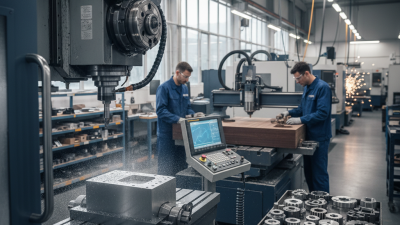
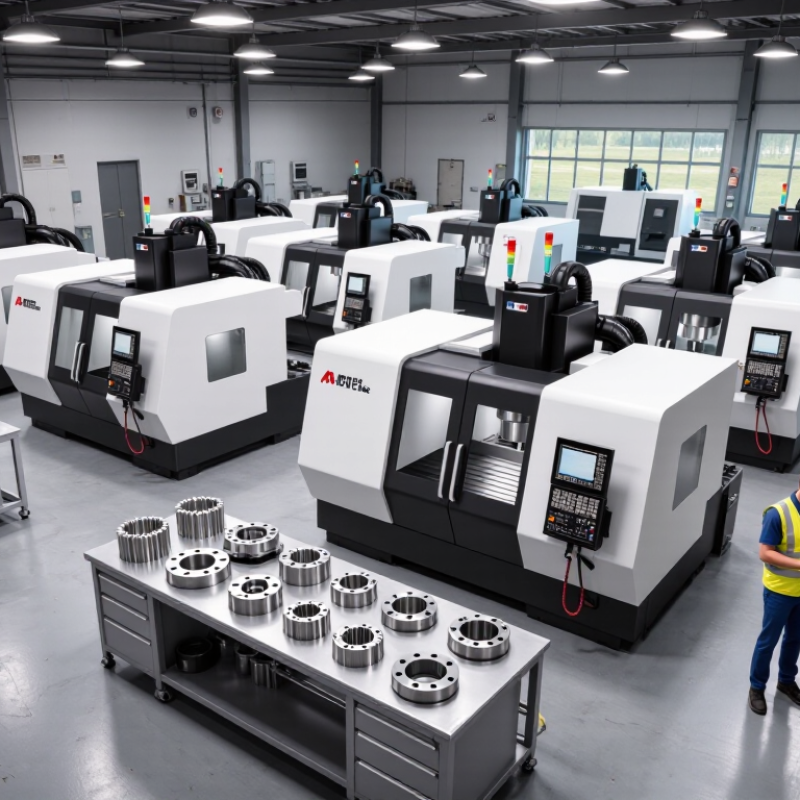
CNC manufacturing companies convert CAD drawings into physical parts using computer-controlled mills, lathes, routers, and grinders. They produce items such as shafts, brackets, housings, and precision fixtures from metals and engineering plastics. A typical order moves through design review, CAM toolpath programming, machine setup, cutting, inspection, and finishing. Operators check dimensions with micrometers or coordinate-measuring equipment; buyers should also request material records and inspection results. The detail matters.

Reliable operation depends on skilled programmers, machine operators, maintenance teams, and quality staff. Deloitte and the Manufacturing Institute’s 2024 workforce report forecasts 3.8 million U.S. manufacturing jobs by 2033, with 1.9 million potentially unfilled. The World Economic Forum’s Future of Jobs Report 2025 says 39% of workers’ core skills may change by 2030. These forecasts underline why training and clear work instructions matter in automated shops. Still, a tidy inspection sheet cannot expose every weak assumption in a drawing; early engineering conversations help catch those.

Tips: Send a 3D model, 2D drawing, material grade, quantity, and finish requirements. Ask how the supplier controls revisions, measures critical features, and protects parts during shipping. Compare the process, not just the quoted price. A low quote can omit a necessary inspection step.

Key Criteria for Comparing CNC Manufacturing Suppliers

Compare suppliers against the part, not a generic machine list. A five-axis mill may suit a complex housing, while a simpler bracket may need only stable three-axis machining. Share a clear drawing, material grade, annual volume, and critical dimensions. Ask how the supplier interprets tolerances and surface-finish requirements. Small misunderstandings can become expensive scrap.

Quality claims need evidence. Request a sample inspection report, material traceability records, and details of how measuring equipment is calibrated. For tight features, ask whether the supplier uses a coordinate measuring machine or another suitable method. A certificate alone does not show how every batch is controlled. Details matter. Review how nonconforming parts are documented and corrected, too.

Capacity and communication deserve equal attention. Ask about realistic lead times, production scheduling, packaging, and shipping updates. A low unit price may exclude tooling, inspection, or freight; request a clear cost breakdown. Compare response quality during quotation: are questions answered precisely, or left vague? A polished capability sheet can still leave gaps. I may put too much weight on fast replies, so verify promises with sample data and agreed acceptance criteria. A small pilot order can reveal issues before a larger production run.

10 Best CNC Manufacturing Companies for Global Buyers: Key Supplier Comparison Criteria

Illustrative evaluation weights for comparing CNC manufacturing suppliers. These are suggested buyer priorities, not measured company results.

Use these weights as a starting point and adjust them to match your part complexity, quality requirements, delivery needs, and purchasing priorities.

Ten Leading CNC Manufacturing Companies for Global Buyers

Ten Leading CNC Manufacturing Companies for Global Buyers

A dependable CNC supplier is judged by more than a polished website. Buyers should examine machining tolerances, material traceability, inspection records, and delivery performance. Ask for sample inspection reports, not just a list of available machines. A clear process matters. The International Federation of Robotics reported 541,302 industrial robots installed worldwide in 2023, reflecting the growing role of automation in production. This figure does not measure CNC capacity directly, but it signals why buyers should ask how suppliers control automated machining, tool changes, and in-process checks.

For global buyers comparing ten leading manufacturers, useful evidence includes documented quality systems, export packaging procedures, and experience with the required materials and part sizes. Request a quote based on the same drawing, tolerance, finish, and order quantity from each supplier. Then compare lead times, inspection methods, and communication—not price alone. A low quote can conceal setup costs or unclear acceptance criteria. No scorecard is perfect. Even a strong supplier may miss a delivery window, so confirm escalation contacts and corrective-action procedures before production. The best shortlist is not necessarily the one with the most machines; it is the one that can explain how each critical dimension will be measured and verified.

10 Best CNC Manufacturing Companies for Global Buyers - Ten Leading CNC Manufacturing Companies for Global Buyers

A name-free comparison framework for evaluating CNC manufacturers. The table focuses on verifiable processes and buyer checks rather than an unsupported company ranking.

Capability to Compare Typical Applications Materials Commonly Processed What Global Buyers Should Verify
3-axis CNC milling Prismatic parts, plates, brackets, housings, and pockets accessible from three linear directions. Aluminum, steel, stainless steel, brass, engineering plastics, and other machinable materials. Maximum part dimensions, workholding approach, quoted tolerances, surface-finish requirements, and inspection method.
4-axis CNC milling Parts requiring machining around a rotary axis, such as components with features on multiple sides. Commonly machinable metals and engineering plastics, subject to machine capacity and tooling. Whether the rotary axis is available for the quoted operation, the number of setups, and how critical features are measured.
5-axis CNC machining Complex contours, angled features, and parts that may benefit from machining multiple faces in fewer setups. Aluminum alloys, steels, titanium alloys, and engineering plastics, depending on equipment and tooling. Machine configuration, part envelope, achievable access to features, workholding plan, and inspection capability.
CNC turning Rotational parts such as shafts, bushings, pins, sleeves, and threaded components. Aluminum, brass, steel, stainless steel, titanium alloys, and machinable plastics. Maximum turning diameter and length, bar-feeding options, thread specifications, and concentricity requirements.
Turn-mill machining Rotational components that also need milled flats, cross-holes, slots, or other off-axis features. Metals and engineering plastics compatible with the supplier’s turning and milling equipment. Which features can be completed in one setup, the production sequence, and inspection of positional relationships.
Prototype and low-volume production Design validation, functional prototypes, bridge production, and small batches. Material choices depend on the design and the supplier’s available stock and machining processes. Prototype lead time, material certification needs, revision control, and whether quoted pricing includes setup and inspection.
Production machining Repeat orders and larger batches of components made to controlled drawings and specifications. Materials selected for the part’s performance, operating environment, and applicable specifications. Capacity planning, process controls, lot traceability, repeatability evidence, and procedures for handling nonconforming parts.
Secondary operations and finishing Parts needing deburring, surface treatment, heat treatment, or other operations after machining. Process compatibility varies by substrate and the required finish or treatment. Which steps are performed in-house or by subcontractors, applicable finish specifications, and acceptance criteria.
Quality inspection and documentation Components with defined dimensional, material, or documentation requirements. Applicable to machined metals and plastics when the supplier can support the specified checks. Request sample inspection reports, measurement equipment details, material certificates if required, and a clear inspection plan.
Export and international order support Cross-border purchasing, repeat shipments, and projects requiring coordinated packaging and delivery. Depends on the product, destination rules, and the buyer’s shipping and documentation requirements. Incoterms, export documentation, packaging method, shipment responsibilities, communication process, and quoted delivery terms.

Note: Capabilities, tolerances, lead times, and material availability vary by supplier, machine, part geometry, and inspection plan. Confirm all requirements against the supplier’s written quotation and technical documentation.

Capabilities, Certifications, and Geographic Reach of Each Company

For global buyers, a strong CNC supplier should match its equipment to the part, not just advertise machine capacity. Check whether it offers three-, four-, or five-axis milling, turning, and suitable materials. Ask for sample inspection reports showing dimensions, tolerances, and surface finish. A machined aluminum housing and a small stainless-steel fitting may need very different setups. Details matter.

Certifications help, but verify the certificate’s scope, issuing body, and covered production site. Quality systems such as ISO 9001, or industry-specific standards where relevant, indicate documented processes; they do not guarantee every shipment will be flawless. A tidy certificate folder is not proof of consistent parts. Request evidence of calibration, traceability, and corrective-action procedures. Then compare the supplier’s geographic reach: nearby technical support, export experience, shipping options, and realistic lead times can reduce costly delays. Ask how time zones affect engineering changes and who handles customs paperwork. Even a well-equipped factory may struggle with communication. Rankings can guide a shortlist, but they cannot replace a drawing review, a clear quotation, and a carefully inspected first article.

How Global Buyers Assess and Select a CNC Manufacturing Partner

Global buyers should assess a CNC partner through evidence, not polished capability claims. Ask for a sample inspection report showing actual dimensions, tolerances, and measurement methods. Check whether material certificates, revision history, and nonconformance records are traceable to the part.

Proof matters.

The 2024 Smart Manufacturing Survey reported that 92% of surveyed manufacturing executives viewed smart manufacturing as a primary competitiveness driver within three years.

For buyers, this makes digital process control worth checking: can the supplier track machine status, inspection results, and order changes? Technology alone is not enough. Request a first-article inspection, then compare its measurements with your drawing and specified datum points. Also ask how the shop handles tool wear or a late material delivery.

Evaluate delivery capacity with real examples.

Ask for recent on-time performance, typical lead-time ranges, and available backup machines for your part family. Review communication during a sample technical query; a clear answer about an unmachinable corner can prevent costly rework.

One uncomfortable truth: a neat quality manual cannot guarantee consistent parts. Verify controls on the shop floor, and make sure quoted tolerances match the material, geometry, and production volume. A small pilot order can reveal gaps a presentation will not.